Tour guide system, interpretation system or app?
Tour guide system or interpretation system: for guided tours and small groups, a tour guide system is usually enough; for congresses with interpreter booths, you need an interpretation system. Event-Solution AG from the Bern region explains when an app is an alternative and what you need to watch out for.

What this is about
Every multilingual event raises the same question: how does the interpreter’s voice reach the guests? There are three common ways. A tour guide system transmits to a small group, usually by radio. An interpretation system connects interpreter booths with receivers in the hall, by infrared or by radio. An app delivers the interpretation to the guests’ smartphones over Wi-Fi or the mobile network.
All three need interpreters. The technology determines how well, how securely and with how much effort the interpretation reaches the guests.
The solutions at a glance
Tour guide system (whisper system)
A tour guide system consists of a small transmitter with a microphone and receivers with earphones or headphones. The interpreter or the guide speaks quietly into the microphone and the group listens in. Nothing needs to be set up and no booth is required. Most tour guide systems transmit by radio, so the group can move around freely.
Typical uses are guided tours, factory visits and whispered interpreting for a small group at a meeting. If you use a tour guide system for interpreting, you should know its limits: the interpreter sits in the room without sound insulation, hears every background noise and works under more strain than in a booth. It is not meant for a full congress day with several languages.
You can hire tour guide systems from tourguidemieten.ch, sent by post or for collection in Zollikofen.
Infrared interpretation system
With an interpretation system, the interpreters work at interpreter desks in soundproofed booths. Their interpretation goes to infrared radiators in the hall, and the guests select their language on the receiver. At least two interpreters work per language and booth, taking turns roughly every half hour.
Infrared has two big advantages: the signal stays in the room, so it is secure against eavesdropping, and there is no radio interference. On the other hand, the receivers need a line of sight to the radiators. Anyone who leaves the hall hears nothing more.
Typical uses are congresses, general meetings, delegates’ meetings and confidential meetings. Event-Solution AG supplies interpretation systems with infrared or radio, more than 1,000 receivers and up to 32 languages, plus mobile interpreter booths.
Radio interpretation system
Here too, the interpreters usually work in booths, but transmission to the guests is by radio. Radio reaches further than infrared and goes through walls. That helps when an event takes place outdoors, is spread over several rooms or the guests are on the move.
The downside: the signal leaves the room and is less secure against eavesdropping. Other radio systems nearby can also cause interference. For confidential content, radio is therefore the weaker choice.
App on guests’ own smartphones
With an app, guests hear the interpretation on their own smartphone, over Wi-Fi or the mobile network. There are two kinds. Either an AI translates, in which case you need neither interpreters nor a booth. Or the app transmits the voices of interpreters, who then still need a quiet place to work, usually a booth. How we use AI interpretation, including with receivers for guests without a phone, is explained under AI simultaneous interpretation.
Points in favour:
- No devices need to be handed out, collected and cleaned.
- The interpretation also reaches guests in other rooms or outside the hall.
- The number of listeners does not depend on the number of receivers.
Points against:
- Battery: a smartphone that runs flat in the afternoon no longer delivers any interpretation.
- Network: many devices at once need stable Wi-Fi. In basement halls, mobile reception is often weak.
- Data protection: the audio usually runs through the provider’s servers. For confidential content, you should clarify where the data is processed.
- Delay: transmission over the internet delays the audio noticeably. Anyone who can see the speaker at the same time will notice.
- Equipment: every guest needs a smartphone and their own headphones. You need a reserve for guests without a suitable device.
Tour guide system or interpretation system: the comparison
| Criterion | Tour guide system | Infrared interpretation system | Radio interpretation system | AI app |
|---|---|---|---|---|
| Group size | small groups | small to very large, all in one hall | small to large, also spread out | depends on the network, large groups too |
| Booth needed | no | yes | usually yes | no, the AI replaces the interpreters |
| Range | around the transmitter, also on the move | one room, line of sight to the radiators | beyond the room, also outdoors | anywhere with Wi-Fi or mobile network |
| Security against eavesdropping | lower than infrared | high, signal stays in the room | lower, signal leaves the room | depends on provider and network |
| Effort | low, hand out devices | high, booths, radiators and technicians | medium to high, booths and transmitters | few devices, but test network and sound beforehand |
| Typical use | Guided tours, factory visits, whispered interpreting | Congresses, general meetings, confidential meetings | Outdoor events or events across several rooms | Public events, guests spread around the building |
In short: whether you need a tour guide system or an interpretation system depends on group size, duration and the number of languages. Whether infrared or radio depends mainly on whether all guests sit in the same room and how confidential the content is. The app is a supplement for open events, once the network and data protection have been clarified.
Deciding in six steps
- Does the group move around? For guided tours, walkabouts and factory visits, a tour guide system is the simple solution.
- How many guests need interpretation? Only a few guests at a meeting: whispered interpreting, with or without a tour guide system. A whole hall: interpretation system.
- How many languages and for how long? Several languages or a full day: booths and an interpretation system. There, the interpreters hear the sound clearly and can concentrate better.
- How confidential is the content? For confidential meetings: infrared, because the signal does not leave the room.
- One room or several? Everything in one hall: infrared. Outdoors or across several rooms: radio.
- Is an app suitable? Only if all guests have a smartphone and headphones with them, the network in the hall has been tested and data protection has been clarified.
That leaves the question of the team. How many interpreters and booths you need is explained in the guide How many interpreters and booths does my event need?
Combinations often make sense
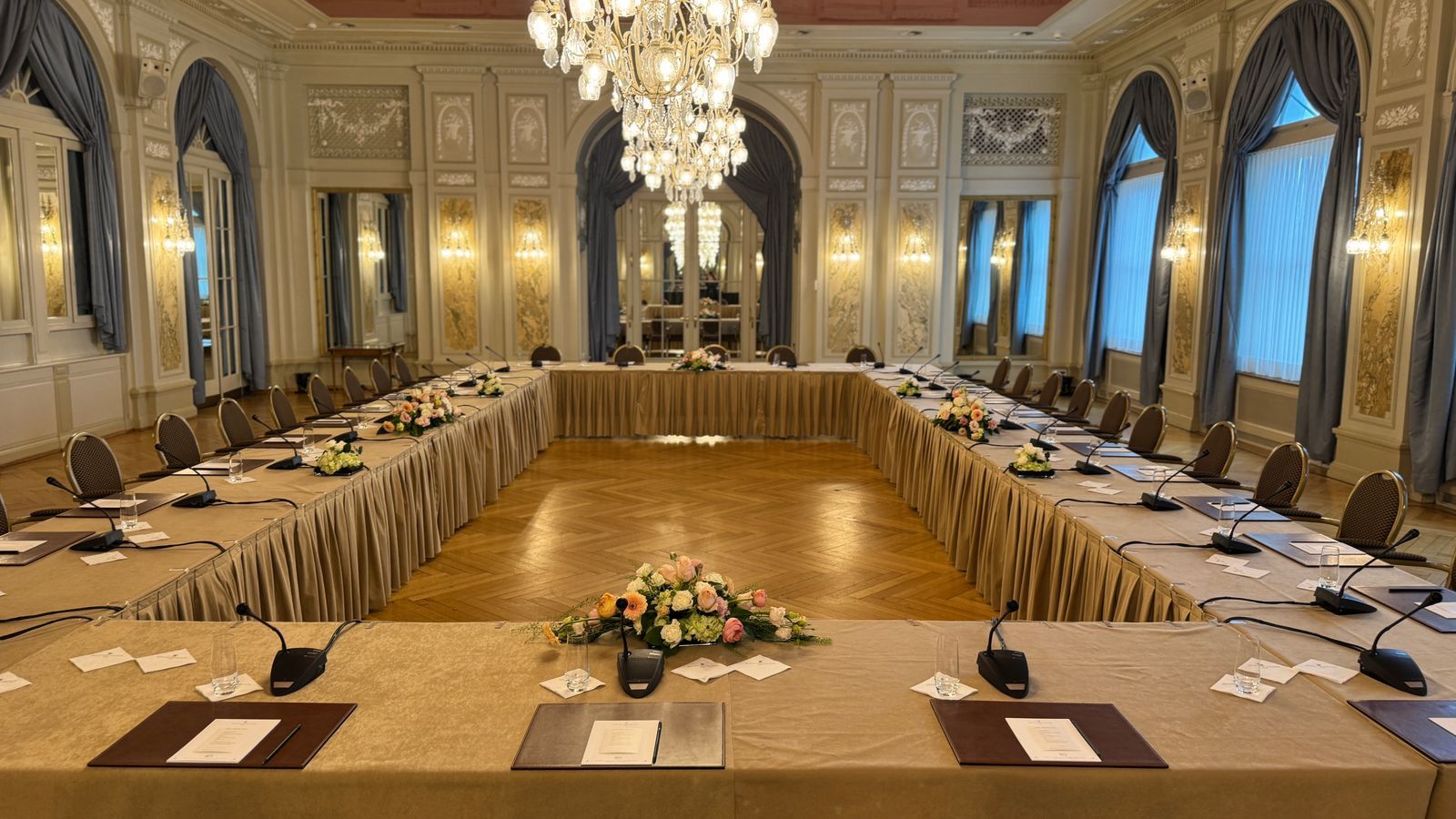
An event does not have to settle on one solution. A congress can use infrared and booths in the hall and offer a factory visit with a tour guide system in the afternoon. For discussions in the hall, a conference system with delegate units on the tables also helps, so that the booths hear every contribution clearly.
Event-Solution AG supplies the interpretation system with booths, receivers and its own technicians from a single source, as at the general meeting of Küche Schweiz at the Volkshaus Biel. For small groups, we recommend the tour guide systems from tourguidemieten.ch. You will find an overview of all interpreting technology under Simultaneous interpretation. For a free quote with no obligation, use the enquiry form.